CONTACT US
|
Wechat
WeChat:+8605925523433Wechat QR code,Contact us
WeChat:+8605925523433Wechat QR code,Contact us

Arabica coffee is widely used in specialty and premium ground coffee products because of its diverse aroma, acidity, sweetness, and origin character. Different origins, varieties, processing methods, roast levels, and blends can produce very different cup profiles, including floral and citrus notes, cocoa and nut tones, caramel sweetness, or ripe-fruit character.
However, “100% Arabica” does not automatically mean better flavor, nor does it replace transparent product information. Coffee quality still depends on green-bean quality, roasting, grinding, storage, brewing, and packaging control. For a single-serve product, the real promise is whether consumers can brew an Arabica coffee that matches the description on the pack.
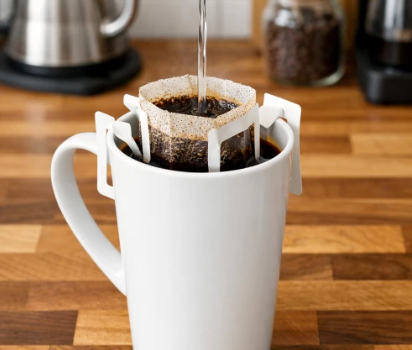
A drip coffee bag is a practical format for portioning, protecting, and standardizing Arabica ground coffee. The coffee is filled into a hanging-ear filter bag and then sealed inside an individual outer envelope. Consumers need only a cup and hot water to brew.
When Arabica ground coffee is developed as a drip coffee bag, the product cannot rely only on the word “Arabica.” Brands should build a complete set of single-cup parameters:
Is the coffee a single origin, a single variety, or an Arabica blend?
Does the roast profile match the intended flavor and drip-brewing method?
Is the grind suitable for hanging-ear filter extraction?
Does the fill weight match the recommended cup volume?
Does the filter bag allow enough room for coffee expansion during pouring?
Do the printed brewing instructions help consumers achieve a reasonably consistent cup?
For example, a light-to-medium Arabica coffee emphasizing floral, citrus, or bright-acidity notes may need tighter control of grind size and water volume. A medium-dark Arabica coffee focused on cocoa, caramel, and nutty notes can be designed as a fuller-bodied everyday cup. Different coffees should not share fixed settings unless those settings have been properly validated.
A drip coffee bag requires hot water to move through a bed of ground coffee. If the grind is too fine, water flow may slow down and lead to over-extraction. If the grind is too coarse, water may pass too quickly and create a thin cup. This difference can be especially noticeable with Arabica coffee because delicate aroma and sweet-acid balance can be strongly affected by extraction.
During development, brands can use cupping and real consumer brewing trials to confirm the relationship between:
Particle distribution and water-flow rate;
Fill weight and cup strength;
Filter-material permeability and brewing time;
Roast development and recommended water temperature;
Pouring method and the balance of sweetness, acidity, and body.
Treating grinding, filling, and brewing as one connected system makes it easier to present Arabica origin character consistently in the final cup.
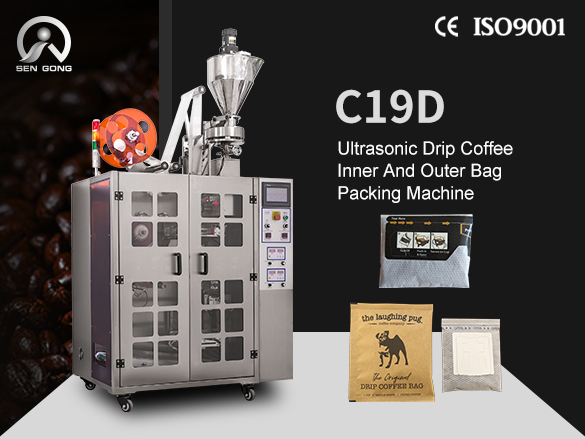
A drip coffee bag packing machine can integrate automatic coffee dosing, inner filter-bag forming, hanging-ear application, and outer-envelope sealing. For Arabica ground coffee, the central value of the equipment is reducing fill-weight variation, maintaining consistent filter-bag structure, and lowering manual handling and powder-leakage risks.
Depending on project requirements, the packaging process may include:
Automatic dosing of Arabica ground coffee;
Inner filter-bag forming and sealing;
Hanging-ear component application;
Individual outer-envelope packing and heat sealing;
Optional nitrogen flushing or gas replacement;
Finished-pack transfer for cartons, gift boxes, or retail multipacks.
For brands offering multiple single-origin coffees, seasonal lots, or different roast-level series, the equipment’s ability to adapt to different fill weights, filter-bag specifications, and outer-envelope sizes is equally important.
Arabica aroma compounds can gradually be affected by oxygen, moisture, light, and surrounding odors after grinding. An individual outer envelope provides additional protection for the hanging-ear filter bag and offers space for origin information, roast dates, brewing guidance, and traceability details.
High-barrier materials, stable heat sealing, and a nitrogen-flushing approach suitable for the product may improve packaging protection during storage and distribution. Brands should not make freshness claims based only on terms such as “Arabica” or “nitrogen packed.” Actual shelf life and flavor-retention performance should be confirmed through testing with real coffee, packaging materials, sealing parameters, logistics conditions, and finished packs.
A premium Arabica drip coffee bag can communicate information that is both accurate and useful:
Coffee origin, variety, or blend details;
Processing method, roast level, and flavor description;
Fill weight and recommended cup volume;
Suggested water temperature, total water volume, and brewing steps;
Production batch, storage instructions, and traceability information;
Whether the product is pure Arabica, together with a complete ingredient list.
When package descriptions match the coffee actually brewed in the cup, consumers can better understand the differences between Arabica coffees and develop trust in the brand.
Equipment trials should use the Arabica coffee, filter material, and outer-envelope film planned for commercial sale. In addition to machine operating speed, validate:
Stability of coffee powder feeding;
Accuracy of fill weight;
Strength of inner-bag seals and hanging ears;
Integrity of outer-envelope sealing;
Brewing performance after transport and storage;
Whether consumers following the package instructions obtain the intended cup profile.
Xiamen Sengong Packing Equipment Co.,Ltd provides equipment solutions for coffee and food packaging projects. For Arabica ground coffee, hanging-ear coffee, single-serve drip coffee, and specialty coffee gift-box products, visit Quicker Pack and VIPacker to explore relevant drip coffee bag packaging equipment and evaluate it against your real product and capacity requirements.
The value of Arabica ground coffee lies not only in the coffee type printed on the label, but in whether each sachet consistently delivers the aroma, sweetness, and complexity it promises. By optimizing grind size, fill weight, and filter-bag structure around the real brewing experience, then using a reliable drip coffee bag packing machine for individual sealing, brands can transform Arabica coffee into a portable, standardized, and repeatable premium single-serve product.
Counseling Hotline
+8613779964655
E-Mail:sales@quickerpack.com
Mobile:+8613779964655
TEL:+8613779964655
Addess:228, Tianfeng Road, North Industrial Zone, Jimei District, Xiamen, Fujian, China.
CopyRight 2004-2026 Xiamen Sengong Packing Equipment Co.,Ltd All Rights Reserved XML MAP