CONTACT US
|
Wechat
WeChat:+8605925523433Wechat QR code,Contact us
WeChat:+8605925523433Wechat QR code,Contact us


Korea has developed a recognizable roasting and coffee culture. The Korea Tourism Organization describes Gangneung Coffee Street as an area associated with cafés, roasting, coffee facilities, and cultural content. Its tourism shopping content has also featured drip-bag sets containing coffees from several origins.
This suggests a useful retail concept: a gift set containing several origins, blends, or roast profiles rather than one repeated coffee.
A multi-flavor box, however, is not simply a collection of individually packed products. Every SKU needs consistent weight, envelope dimensions, seal position, and orientation. Changeovers must also prevent retained coffee, incorrect film, and assortment errors.
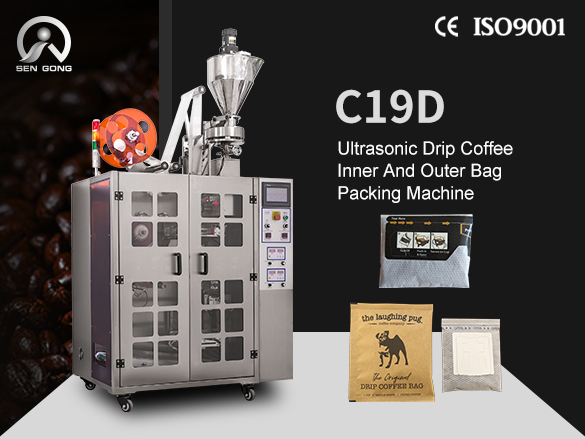
The ultrasonic drip coffee bag packing machine provides front-end standardization so that different coffees become uniform individual packs suitable for downstream handling and cartoning.
Korea is generally a coffee-consuming, roasting, and product-development market rather than a common commercial growing origin.
A product can be described as coffee from a Korean brand, roasted in Korea, or developed for the Korean market. The actual bean-growing country, roasting location, and packaging location should still be identified separately.
Each coffee in an assortment should distinguish:
Single origin or blend.
Bean origin.
Processing method.
Roast level.
Net weight.
Tasting notes verified with the actual coffee.
Recommended brewing method.
The outer gift box can summarize the collection, but it should not replace appropriate product identification on the individual envelopes.
A single-SKU run uses one approved combination of coffee, settings, and film. A gift assortment may require frequent changes among coffee, printed film, and production codes.
Poor controls can result in:
Light-roast coffee inside dark-roast film.
Coffee residue entering the next SKU.
Different bag lengths or seal positions.
Incorrect orientation during cartoning.
Missing, repeated, or incorrect flavors.
Batch information that does not match the coffee.
Machine selection should therefore assess changeovers, cleaning, and first-off approval in addition to continuous output.
Two products with the same target weight may behave differently.
Light and dark roasts, single origins, and blends can have different bulk density, particle distribution, degassing condition, and flow behavior. One machine setting may not deliver the same actual weight for every coffee.
After each SKU change, verify:
Coffee identity against the production order.
Grind setting.
Weight across consecutive bags.
Coffee height inside the filter.
Dust during filling.
Grounds in the sealing area.
Weight after speed increases.
Identical bag dimensions do not remove the need for recalibration.
Depending on the model and configuration, the equipment may integrate dosing, inner-filter forming, ultrasonic joining, hanging-support handling, individual wrapping, and coding.
The machine places ground coffee in the filter. Dosing consistency affects cup strength, occupied volume, and sealing.
High-frequency mechanical vibration joins compatible filter material. It forms the filter structure; it does not alter flavor or independently extend shelf life.
The process is not entirely free of localized heat, and not every filter paper or nonwoven material is suitable.
The supports should open conveniently and remain secure on the cup. When the occupied volume changes, available pouring space should be rechecked.
The envelope identifies the SKU, origin, tasting profile, and brewing method while providing storage protection. It generally uses heat sealing compatible with its laminated film.
The code should correspond with the SKU, coffee lot, and production record and remain clear of seals, cuts, barcodes, and essential text.
A gift set may combine floral, fruit-forward, nutty, or darker-roasted coffees. Grounds retained from the previous product can enter the first packs of the following SKU.
Changeover cleaning should cover:
Hopper.
Dosing components.
Filling passages.
Filter-forming area.
Powder traps near the sealing system.
Product-contact tools.
Work surfaces and collection containers.
The company should establish a written procedure based on machine instructions, its food-safety plan, and the actual products. Aroma alone is not sufficient evidence that cleaning is complete.
For frequent short runs, cleaning access, retained product, and changeover time should influence the purchasing decision.
Production can be scheduled in an evaluated sequence to reduce unnecessary cleaning and film changes.
Consider:
Roasting and grinding schedules.
Required quantity of each SKU.
Printed-film availability.
Sensory differences among coffees.
Cleaning difficulty.
Cartoning sequence.
Order deadlines.
Reducing cleaning should not create assortment errors. After each SKU, reconcile accepted packs, held product, waste, and remaining film before beginning the next one.
Small length differences may be difficult to notice when bags are sold individually. They become obvious when several packs are aligned inside one box.
Variation may also interfere with automatic counting, conveying, stacking, or cartoning.
Inspect:
Envelope length and width.
Top and bottom seal positions.
Tear-notch position.
Front-and-back orientation.
Flatness.
Position of the inner filter.
Overall pack thickness.
Design the tray or divider using actual production packs rather than artwork dimensions alone.
The ultrasonic drip coffee machine produces individual packs. Sorting, counting, assortment building, and cartoning depend on the complete line configuration.
Confirm:
Product orientation at discharge.
Conveyor speed and spacing.
Inspection or rejection requirements.
Batch cartoning versus online assortment.
Quantity of each flavor per box.
Tray or divider use.
Labeling, overwrapping, and case-packing needs.
Do not assume that a machine capable of packing coffee automatically performs every gift-box operation. Downstream functions require separate confirmation.
Each SKU can use a clear and verifiable identifier, such as color, product code, barcode, or another internal control.
The process may include:
Film verification before loading.
First-off pack approval.
Segregated storage by SKU.
Quantity checks before cartoning.
Random post-cartoning inspection.
Linking box codes with individual-pack lots.
Reconciliation of loose bags and remaining film.
Vision inspection, barcode scanning, automatic counting, or checkweighing should be validated with the actual packages if included in the line.
Sample every SKU rather than only one coffee in the box.
Inspect grounds in seams, joint continuity, support position, and wet strength.
Check sealing, wrinkles, contamination, and opening convenience.
Confirm the quantity, flavor combination, orientation, and outer-box information.
Test the intended case and distribution format to identify movement or damage.
Sample different SKUs and production stages to confirm drainage, strength, and the intended flavor.
Xiamen Sengong Packing Equipment Co., Ltd supplies drip coffee, tea bag, and other beverage packaging equipment. Buyers can also explore relevant products through its VIPacker website.
The C19H Ultrasonic Drip Coffee Inner and Outer Bag Packing Machine is one model available for further evaluation.
Material compatibility, bag dimensions, speed, product-setting management, and optional functions should be verified using the real coffee and printed film and documented in the agreed technical specification.
Provide:
Actual ground samples of every coffee.
Target weight for each SKU.
Inner and outer bag dimensions.
Printed film for each product.
Planned volume by SKU and gift set.
Changeover frequency.
Flavor combination per box.
Coding and easy-tear requirements.
Downstream conveying, inspection, and cartoning plans.
A Korean multi-flavor drip coffee gift box converts the experience of a roastery into a convenient retail product. The more diverse the assortment becomes, the more important individual-pack consistency becomes.
An ultrasonic drip coffee bag packing machine can integrate dosing, inner-filter joining, and individual outer wrapping. SKU changeovers, residue control, film verification, and downstream cartoning determine whether the collection is delivered accurately and neatly.
A mature line does more than package several coffees. It ensures that every coffee enters the correct envelope and the correct position in the correct quantity.
Potentially, when the coffees, filters, and bag formats fall within the machine’s range. Dosing and sealing should be rechecked after every change.
Yes. Different roast and grind characteristics can change bulk density and flow behavior.
An inner and outer bag machine primarily produces individual coffee packs. Automated counting, assortment building, and cartoning depend on additional line configuration.
Use a documented changeover procedure covering the hopper, dosing unit, and filling path, followed by checks on the first packs of the next product.
Counseling Hotline
+8613779964655
E-Mail:sales@quickerpack.com
Mobile:+8613779964655
TEL:+8613779964655
Addess:228, Tianfeng Road, North Industrial Zone, Jimei District, Xiamen, Fujian, China.
CopyRight 2004-2026 Xiamen Sengong Packing Equipment Co.,Ltd All Rights Reserved XML MAP