CONTACT US
|
Wechat
WeChat:+8605925523433Wechat QR code,Contact us
WeChat:+8605925523433Wechat QR code,Contact us

Moldova is not a major coffee-growing origin, but coffee products for the market can be developed through imported green beans, roasting, blending, grinding, and retail packaging. Therefore, “Moldova ground coffee” is more accurately understood as coffee roasted, ground, packed, or sold for the Moldovan market—not as a claim that the beans originate in Moldova.
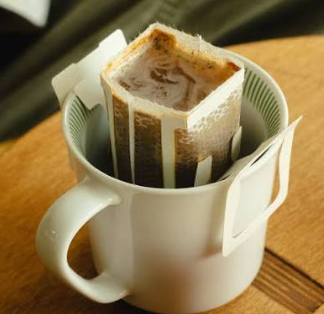
For many consumers, ground coffee needs to balance convenience with flavor. They may want more coffee aroma than instant coffee can offer, while avoiding the need for a coffee machine, filter paper, or complicated equipment. A drip coffee bag provides this middle ground: each coffee portion is individually sealed, clearly dosed, and packed inside a filter bag that hangs over the cup.
Consumers simply open the outer envelope, unfold the paper ears, attach them to a cup, and pour hot water in stages. This format is well suited to retail sampling, offices, hotel rooms, e-commerce assortments, travel products, and seasonal gift boxes.
For the Moldovan market, a drip coffee product does not need to rely on broad geographic labels. It can create stronger differentiation through real roast style, cup strength, and consumption occasion.
Brands may develop different ranges:
Balanced Everyday Coffee: medium-roast blends with nutty, cocoa-like, and gently sweet notes;
Full Breakfast Coffee: medium-dark roasts for pairing with bread, pastries, and breakfast foods;
Selected Arabica Coffee: highlighting bean type, origin, process, and flavor profile;
Office Single-Serve Coffee: focused on equipment-free brewing, hygiene, and easy use;
Seasonal Gift Sets: combining several roast levels or flavor directions in one discovery pack.
This approach turns drip coffee bags into part of a broader brand portfolio rather than treating them as only one packaging format.
For ground coffee, consumer judgment often begins with the brewing process. Does water flow smoothly? Is the cup too weak, too bitter, or overly sedimented? These factors matter just as much as package design.
Drip coffee bag development should consider:
Coffee grind size and particle consistency;
Fill weight per sachet;
Water permeability of the filter material;
Coffee-bed depth and filter-bag capacity;
Recommended water volume, pouring rhythm, and brewing time;
In-cup performance of different roast levels.
Coffee that is too fine can slow dripping and increase the risk of bitterness or clogging. Coffee that is too coarse can drain too quickly and taste thin. Real brewing trials are needed to connect coffee flavor with the packaging structure.
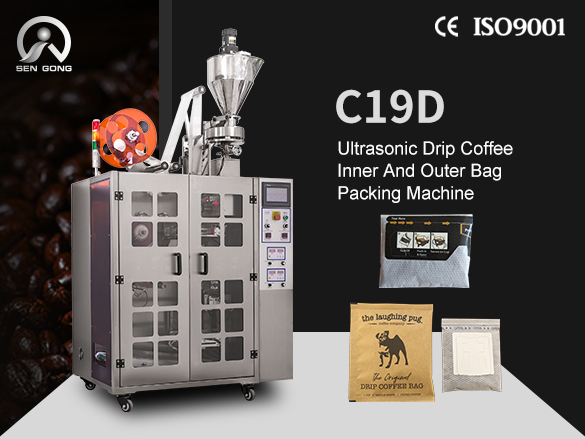
A drip coffee bag packing machine integrates several critical processes into a continuous workflow, enabling ground coffee to become a more consistent finished product. Typical stages include automatic dosing, filter-bag forming, hanging-ear application, outer-envelope packing, and finished-pack output.
Depending on the configuration, a production line can provide:
Automatic measured filling of ground coffee;
Inner filter-bag forming and sealing;
Hanging-ear component application;
Individual outer-envelope heat sealing;
Optional nitrogen flushing or gas replacement;
Connection with cartoning, multipacks, or gift-box operations.
For Moldova ground coffee brands, stable automation can help control fill weight, reduce powder leakage and seal defects, and create a more uniform appearance on retail shelves.
The individual outer envelope of a drip coffee bag is not only a branding surface. It also protects ground coffee during storage and logistics. After grinding, coffee can be affected by oxygen, moisture, light, and surrounding odors, so outer-envelope materials and seal quality should match the product’s intended distribution conditions.
Brands may evaluate high-barrier films, heat-sealing parameters, and nitrogen-flushing options according to the project. E-commerce, gift-box, and cross-regional delivery products should also undergo transport and storage testing to confirm real-world packaging performance.
A specific freshness or shelf-life claim should not be made automatically. It should be based on the actual coffee formula, packaging materials, production settings, distribution environment, and finished-product test results.
A high-quality Moldova ground coffee drip bag should provide clear, accurate information, including:
Coffee origin or blend details;
Roast level, flavor direction, and strength guidance;
Fill weight and recommended cup size;
Suggested water temperature, total water volume, and brewing steps;
Production batch, storage conditions, and shelf-life information;
Appropriate market languages and required food-label information.
Simple brewing illustrations are especially useful for first-time hanging-ear coffee users and can reduce flavor variation caused by different preparation methods.
Before choosing equipment, brands should conduct full trials using the actual coffee, filter material, and outer-envelope film intended for sale. Beyond packing speed, validate:
Powder-flow stability across different coffee blends;
Accuracy of each pack’s fill weight;
Seal strength of filter bags and hanging ears;
Outer-envelope appearance, seal integrity, and leakage resistance;
Finished-pack condition after transport, storage, and display;
Water flow, brewing time, and cup flavor when consumers follow the instructions.
Xiamen Sengong Packing Equipment Co.,Ltd provides equipment solutions for coffee and food packaging projects. For Moldova ground coffee, hanging-ear coffee, single-serve drip coffee, and gift-box packaging projects, visit Quicker Pack and VIPacker to explore relevant drip coffee bag packing equipment and evaluate it with your actual formula, packaging materials, and production requirements.
The value of Moldova ground coffee drip bags lies in combining coffee aroma, convenience, and retail presentation in one individual single-serve product. By optimizing grind size, fill weight, filter bags, and outer-envelope sealing around the real brewing experience, then using a reliable drip coffee bag packing machine for stable production, brands can create quality coffee products for everyday retail, offices, hotels, e-commerce, and gifting.
Counseling Hotline
+8613779964655
E-Mail:sales@quickerpack.com
Mobile:+8613779964655
TEL:+8613779964655
Addess:228, Tianfeng Road, North Industrial Zone, Jimei District, Xiamen, Fujian, China.
CopyRight 2004-2026 Xiamen Sengong Packing Equipment Co.,Ltd All Rights Reserved XML MAP