CONTACT US
|
Wechat
WeChat:+8605925523433Wechat QR code,Contact us
WeChat:+8605925523433Wechat QR code,Contact us

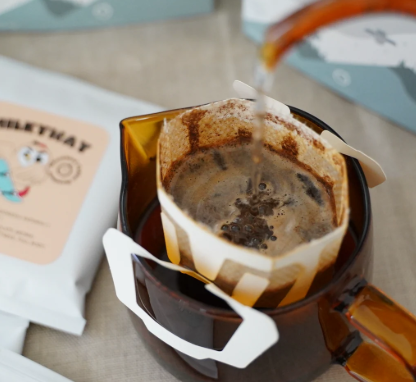
Saudi Arabia’s coffee market retains a strong hospitality tradition while also creating broader modern demand. Hotel breakfasts, business meetings, chain retail, home offices, festive gifting, online orders, and travel consumption all require coffee products that are convenient, consistent, and easy to present.
When ground coffee is sold in a large bag, consumers need to measure it, prepare a filter, and manage the brewing method themselves. A drip coffee bag combines coffee grounds, a filter bag, and a single-cup dose into one individually packed unit. Consumers open the outer envelope, hang the bag over a cup, and pour in hot water to brew directly in the cup.
For roasters, importers, hospitality suppliers, and private-label brands serving the Saudi market, this format is not only about convenience. It is also a way to standardize coffee delivery across different channels.
In this article, “Saudi Arabia ground coffee” means coffee roasted, ground, packed, or sold for the Saudi market. It should not be interpreted as a claim that the beans are necessarily grown in Saudi Arabia.
A successful drip coffee bag begins by defining the cup the consumer should receive. Brands should establish the product goal before choosing package graphics or format details:
For hotel rooms: simple brewing steps, balanced flavor, and compatibility with common cup sizes;
For offices: consistent brewing, individual hygiene, and bulk-purchase suitability;
For gift boxes: clear flavor differentiation, refined appearance, and easy multi-SKU assortment;
For specialty retail: roast level, bean type, origin, flavor notes, and brewing parameters;
For travel channels: lightweight packs, reliable sealing, and easy-to-read instructions.
Once the target experience is defined, fill weight, grind size, filter-bag dimensions, and recommended water volume can be selected more effectively. This reduces the risk of producing an attractive package that delivers an unsatisfactory brew.
Arabic coffee traditions may include light roasting, cardamom or other spices, pot brewing, and shared serving. These cultural characteristics can inspire a modern product, but coffee intended for traditional pot brewing is not automatically suitable for a drip coffee bag.
Drip extraction requires water to pass through a coffee bed inside the filter. An overly fine grind, excessive fines, or complex spice particles can affect flow rate and extraction uniformity. Therefore, a Saudi-style drip coffee product should be tested for:
Whether the coffee blend provides sufficient aroma and body under drip conditions;
Whether the grind enables smooth but controlled water flow;
Whether spices affect filtration, powder flow, or seal quality;
Whether the fill weight matches the target cup volume;
Whether consumers following the on-pack instructions can achieve consistent results.
This development process allows cultural flavor inspiration and modern brewing to work together.
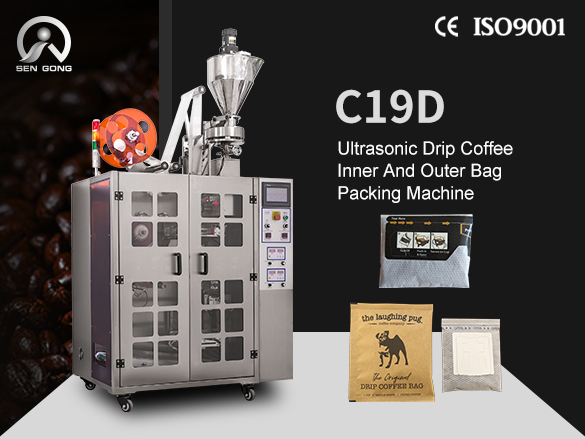
A drip coffee bag packing machine repeatedly delivers the product structure that has been validated during development. A typical process includes ground-coffee dosing, inner filter-bag forming and sealing, hanging-ear attachment, individual outer-envelope packing, and optional nitrogen flushing or gas replacement.
Depending on the project, a system can support:
Accurate and stable automatic ground-coffee filling;
Formation of hanging-ear filter bags for brewing;
Consistent hanging-ear position and filter-bag structure;
Individual outer-envelope heat sealing;
Date coding, batch coding, and traceability management;
Regular finished packs for cartons, pouches, gift boxes, and hospitality kits.
For brands offering multiple blends or retail formats, the ability to adjust fill weights, pack dimensions, and operating parameters efficiently is also important in day-to-day production.
Ground coffee can be affected by oxygen, moisture, light, and environmental odors. The outer envelope of a drip coffee bag is not simply decorative; it is part of finished-product quality control.
High-barrier films, correct sealing temperature and pressure, stable seal areas, and appropriate nitrogen flushing may improve protection during storage and distribution. However, equipment, films, and nitrogen are not automatic guarantees of shelf life. Brands should perform seal-integrity, transportation, storage, and brewing tests with the actual product, then establish shelf-life and storage instructions from the results.
For Saudi and wider Gulf-market projects, elevated ambient temperatures, storage duration, and logistics routes should be included in packaging validation.
First-time drip-bag users need clear instructions. Packaging can concisely show the process:
Open the outer envelope;
Pull out the hanging ears and attach them to the cup;
Add a small amount of water to wet the coffee;
Pour the recommended total volume in stages;
Remove the bag after dripping is complete.
The pack can also state fill weight, roast level, flavor direction, recommended water volume, storage instructions, coffee source, and ingredient details. If cardamom or other spices are included, they should be declared accurately. For Saudi and export markets, Arabic, English, and other required compliance information should be prepared according to the specific destination.
Before choosing equipment, brands should run trials using the coffee, filter material, and outer-envelope film intended for commercial sale. Beyond checking that the machine operates, assess whether the finished product meets the brand standard:
Is the fill weight accurate in every sachet?
Is powder feeding stable and free from leakage?
Are the filter-bag seals and hanging ears secure?
Are outer envelopes flat and completely sealed?
Does the product still brew properly after storage and transportation?
Are brewing time and cup flavor consistent across batches?
Xiamen Sengong Packing Equipment Co.,Ltd provides equipment solutions for coffee and food packaging projects. For Saudi Arabia ground coffee, single-serve drip coffee, and hanging-ear coffee bag projects, visit Quicker Pack and VIPacker to explore relevant packaging equipment and evaluate solutions using your actual product, packaging materials, and capacity requirements.
Turning Saudi Arabia ground coffee into a drip coffee bag is not simply a matter of placing coffee grounds inside a filter. It means building a repeatable single-cup standard from recipe and grind to dosing, sealing, and the final brewing experience. A reliable drip coffee bag packing machine can help brands reproduce that standard across hospitality, retail, gifting, and online channels—creating a modern coffee product with both operational efficiency and clear market identity.
Counseling Hotline
+8613779964655
E-Mail:sales@quickerpack.com
Mobile:+8613779964655
TEL:+8613779964655
Addess:228, Tianfeng Road, North Industrial Zone, Jimei District, Xiamen, Fujian, China.
CopyRight 2004-2026 Xiamen Sengong Packing Equipment Co.,Ltd All Rights Reserved XML MAP