CONTACT US
|
Wechat
WeChat:+8605925523433Wechat QR code,Contact us
WeChat:+8605925523433Wechat QR code,Contact us

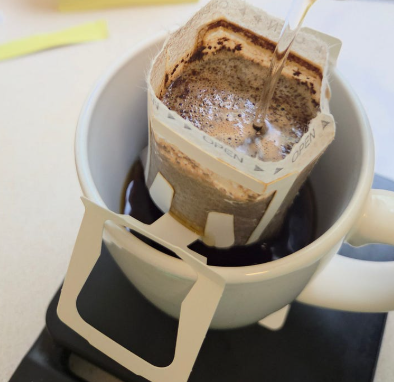
The U.S. coffee market includes everyday high-volume consumption as well as specialty roasting, single-origin coffee, cold brew, subscriptions, e-commerce sampling, and office coffee programs. For roasters and private-label brands, ground coffee does not have to be limited to large pouches, cans, or capsules.
A drip coffee bag provides a modern single-serve format. Each pack contains a pre-measured portion of ground coffee inside a hanging-ear filter bag. Consumers need no coffee machine or extra filter paper—only a cup and hot water. This format is particularly suitable for projects that require small-format packs, individual hygiene, and a consistent cup experience.
In this article, “USA ground coffee” means coffee roasted, ground, packed, and sold for the U.S. market. It does not mean that the coffee beans must be grown in the United States. Brands can use coffee from Latin America, Africa, Asia, or other origins while developing roasts and packaging for their intended consumers.
Compared with a full-size bag of ground coffee, a drip coffee bag can be an accessible first experience of a new brand, origin, or roast profile. Consumers do not need to purchase an entire bag or own a specific brewing device before trying the coffee.
U.S.-market development can therefore use a sampling-and-conversion approach:
New Product Sample Packs: for launches, trade shows, retail sampling, and e-commerce gifts;
Coffee Subscription Assortments: monthly selections of origins, roast levels, or seasonal releases;
Single-Origin Series: with processing method, altitude, roast information, and flavor direction on the pack;
Office Supply Packs: for equipment-free brewing, individual hygiene, and easy replenishment;
Travel and Outdoor Packs: lightweight coffee that can be brewed almost anywhere;
Gift Discovery Sets: multiple small-format coffees that build a brand story and encourage repeat purchase.
This makes a drip coffee bag more than a smaller ground-coffee package. It becomes a product tool for customer acquisition, trial, and channel expansion.
U.S. consumers have diverse preferences across dark roasts, light roasts, blends, and specialty-processed coffees. Different SKUs should not differ only in their package artwork; their brewing parameters should also be confirmed.
Drip coffee bag quality is shaped by the interaction of:
Grind size for hot-water drip extraction;
Fill weight matched to the recommended cup volume;
Filter-material permeability and strength;
The relationship between roast level, coffee density, and fill weight;
Recommended water temperature, total water volume, and pouring method;
Actual brewing results across different user conditions and water sources.
A dark roast may focus on chocolate, caramel, and fuller body. A light-to-medium single-origin coffee may require more careful grind and water-volume control to retain its brighter acidity and floral or fruit notes. Each formula should be validated through real cupping and consumer brewing trials rather than theoretical settings alone.
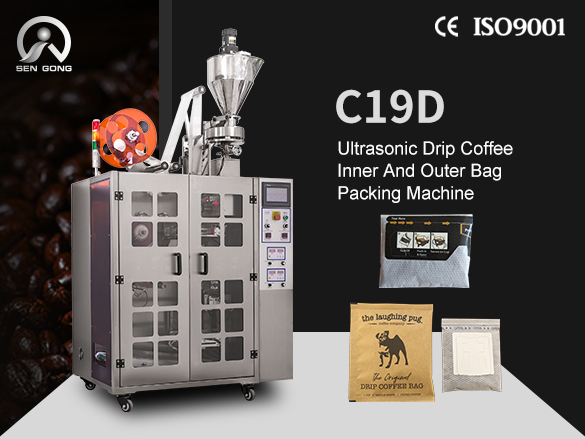
Coffee brands serving the U.S. market often manage several roast levels, origins, and retail formats at the same time. A drip coffee bag packing machine helps turn these product designs into controlled, repeatable finished packs.
Depending on the machine configuration, the process may include:
Automatic measuring and filling of ground coffee;
Inner filter-bag forming and heat sealing;
Hanging-ear component application;
Individual outer-envelope packaging;
Optional nitrogen flushing or gas replacement;
Connection with cartoning, strip packs, subscription boxes, or e-commerce multipacks.
For multi-SKU projects, brands should assess whether the equipment can efficiently adjust fill weight, filter-bag dimensions, outer-envelope size, and operating parameters. Good changeover capability can reduce production pressure for small-batch launches, seasonal products, and subscription assortments.
The outer envelope of a drip coffee bag does more than display the brand. It helps protect ground coffee, which can be affected by oxygen, moisture, light, and surrounding odors. E-commerce and subscription products may also pass through warehousing, sorting, transport, and varied climate conditions.
High-barrier packaging materials, stable sealing processes, and nitrogen flushing where appropriate may improve protection during distribution. Brands should still run seal-integrity, drop, transport, storage, and brewing tests with actual samples before establishing shelf-life, storage guidance, or freshness-related claims.
Strong product pages and useful packaging information make drip coffee bags easier for consumers to understand. Consider presenting:
Coffee origin, blend details, or processing method;
Roast level and accurate flavor description;
Fill weight, number of sachets, and pack format;
Recommended water volume, water temperature, and brewing instructions;
Whether the product contains pure coffee, together with complete ingredient information;
Batch details, storage guidance, and traceability information;
Suitable occasions such as office use, travel, camping, or gifting.
This content helps consumers brew correctly while also providing richer, more authentic material for individual product pages and website content.
Before selecting equipment, do not rely only on standard test powder or machine speed. A more useful approach is to conduct complete trials using the commercial coffee, filter material, outer-envelope film, and target fill weight.
Evaluate:
Powder flow and dosing stability across different roast levels;
Inner-bag seals, hanging-ear position, and powder leakage;
Outer-envelope seal quality, flatness, and integrity;
Pack condition after simulated e-commerce delivery or transport;
Brewing speed and cup quality when consumers follow the printed instructions;
Changeover efficiency for small-batch, multi-SKU production.
Xiamen Sengong Packing Equipment Co.,Ltd provides equipment solutions for coffee and food packaging projects. For USA ground coffee, hanging-ear coffee, single-serve drip coffee, subscription gift boxes, and e-commerce multipacks, visit Quicker Pack and VIPacker to explore relevant equipment solutions and evaluate them against your actual product and production-capacity requirements.
The value of USA ground coffee drip bags is their ability to bring coffee flavor into subscriptions, e-commerce, offices, travel, and specialty retail with a low barrier to trial. By designing grind size and dosing around the brewing experience, then combining a reliable drip coffee bag packing machine with individual outer-envelope sealing and multi-SKU capability, coffee brands can create products that are easier to discover, share, and reorder.
Counseling Hotline
+8613779964655
E-Mail:sales@quickerpack.com
Mobile:+8613779964655
TEL:+8613779964655
Addess:228, Tianfeng Road, North Industrial Zone, Jimei District, Xiamen, Fujian, China.
CopyRight 2004-2026 Xiamen Sengong Packing Equipment Co.,Ltd All Rights Reserved XML MAP