CONTACT US
|
Wechat
WeChat:+8605925523433Wechat QR code,Contact us
WeChat:+8605925523433Wechat QR code,Contact us

Costa Rica coffee is often valued by specialty coffee consumers for origin character, processing methods and micro-lot offerings. For estates, cooperatives, roasters and export brands, coffee value comes not only from where coffee is grown, but also from whether consumers can clearly experience flavor differences between lots.
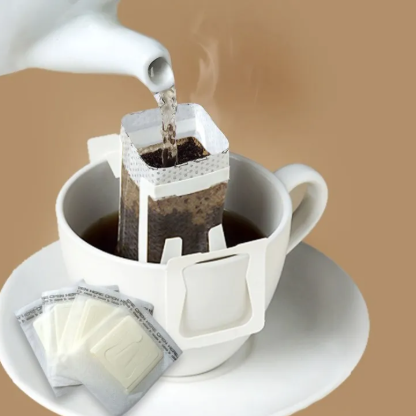
A drip coffee bag, also called a hanging-ear coffee bag, contains a measured dose of ground coffee inside a filter bag and seals it in an individual outer envelope. Consumers need only a cup and hot water to prepare filtered coffee. For micro-lot and single-origin products, this format works particularly well for tasting, gift boxes, e-commerce, hotels and specialty retail, allowing consumers to explore different coffees with a lower commitment.
Micro-lot coffee is often limited in quantity and distinctive in flavor, so it may not be best presented only in large packs. Drip coffee bags allow brands to divide a coffee lot into clear single-cup experience units, making it easier for consumers to try and easier for brands to manage by batch.
Possible product directions include:
Estate micro-lot coffee: Products with estate, process method, lot code and flavor details;
Processing-method discovery boxes: Multi-pack tasting sets comparing coffees prepared through different processes;
Origin exploration collections: Individual envelopes that clearly distinguish growing area, roast level or flavor style;
Curated coffee subscriptions: Monthly micro-lot selections that encourage ongoing discovery;
Premium gift collections: Individual envelopes, brewing cards and lot stories for higher-value gifting.
Each coffee bag can become a small tasting experience, helping consumers understand flavor, processing and coffee origin more gradually.
Different Costa Rica coffee lots, roast levels and processing styles may not require identical grind settings when developed as drip coffee bags. Grind should be tested together with the desired cup profile, coffee dose, filter-bag specification, recommended water volume and target cup size.
Coffee that is too fine may create slow flow, clogging, bitterness or over-extraction. Coffee that is too coarse may limit the expression of floral-fruity notes, sweetness or complexity. Brands should validate brewing with final ground coffee and actual packaging materials rather than relying only on general grind standards.
A brewing record for each micro-lot can include:
Net coffee content per bag;
Grind particle range;
Recommended water temperature;
Total water volume;
Staged pouring rhythm;
Target brewing time;
Aroma, acidity, sweetness, body and aftertaste performance.
This record supports stable packaging production and gives consumers more useful brewing guidance.
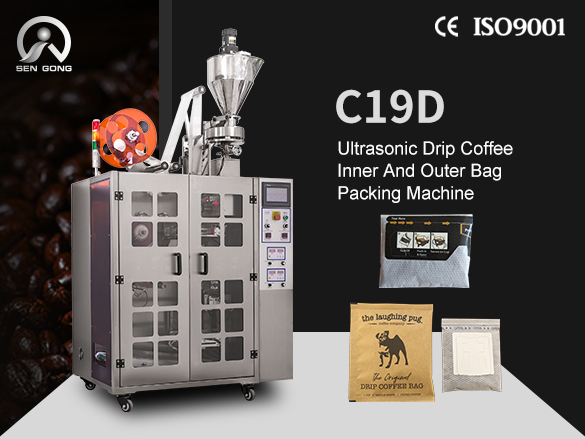
Depending on configuration, a drip coffee bag packaging machine can integrate automatic coffee dosing, inner filter-bag forming, hanging-ear attachment, individual outer-envelope sealing and optional nitrogen flushing. For Costa Rica micro-lot ground coffee, the equipment should support accurate dosing and practical product changeovers between different lots.
Key factors include:
Real coffee dosing performance
Roast level, particle distribution, density and static charge can affect filling. Trials should use the final ground coffee.
Filter flow and hanging-ear quality
Filter bags should match coffee grind and dose, while hanging ears must hold securely on common cup types to support consumer use.
High-barrier individual envelopes
Ground coffee is sensitive to oxygen, moisture, light and odor transfer. High-barrier envelopes help preserve the aroma and flavor of micro-lot coffee.
Optional nitrogen flushing
Products for aroma retention, export distribution or subscription delivery may evaluate nitrogen flushing. Actual freshness performance should be confirmed through finished-product and storage tests.
Small-lot information management
Envelopes and cartons should clearly carry batch codes, roast dates and product identifiers to prevent confusion between different lots.
Specialty coffee packaging should help consumers understand coffee rather than overwhelm them with terminology. Drip coffee bag envelopes can use clear language to explain origin, process method, roast level, flavor direction and brewing guidance.
If a brand uses terms such as “micro-lot” or “single estate,” the information should be supported by genuine records. Export products should also be reviewed for destination-market label language, net content, origin claims, date marking and other compliance requirements.
Before equipment purchase or commercial production, test final coffee, filter bags and outer-envelope film together. Confirm:
Is coffee weight consistent in every bag?
Are filter bags properly formed and hanging ears secure?
Are outer-envelope seals reliable?
Are lot codes clear?
Does transport simulation reveal powder leakage, damage or deformation?
Are water flow, aroma and cup flavor consistent with the intended profile for that lot?
Xiamen Sengong Packing Equipment Co.,Ltd provides packaging equipment solutions for drip coffee bags and single-serve ground coffee products. Brands can choose suitable configurations based on coffee grind, per-pack coffee dose, output targets, filter-bag specifications, outer-envelope formats, lot-management needs and freshness requirements.
Learn more:
Drip coffee bags for Costa Rica ground coffee can transform micro-lot coffee from an origin story into a brewable, comparable and shareable single-cup experience. With a compatible grind profile, reliable individual envelopes and stable packaging equipment, brands can serve specialty retail, subscriptions, e-commerce, gifting and export markets more effectively.
Counseling Hotline
+8613779964655
E-Mail:sales@quickerpack.com
Mobile:+8613779964655
TEL:+8613779964655
Addess:228, Tianfeng Road, North Industrial Zone, Jimei District, Xiamen, Fujian, China.
CopyRight 2004-2026 Xiamen Sengong Packing Equipment Co.,Ltd All Rights Reserved XML MAP